
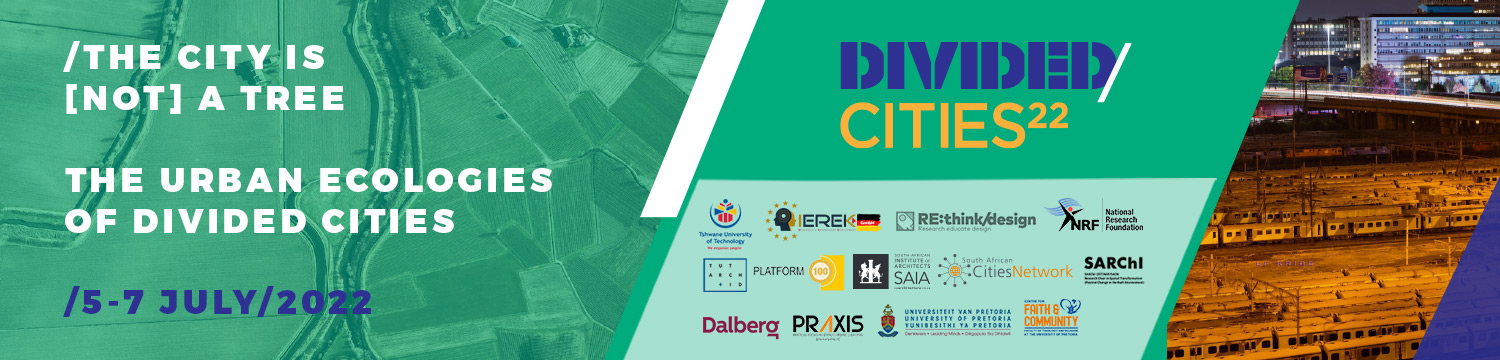
The City is [NOT] a Tree: The Urban Ecologies of Divided Cities
- 5th Jul - 7th Jul 2022
- Conference in Collaboration with TUT, South Africa
- uedc@ierek-scholar.org
About the Conference
THE CITY IS [NOT] A TREE creates awareness of the problems that cause spatial, physical, political, social, economic, racial, and religious divisions in cities. Architects, planners, built environment professionals, social and political scientists, economists, designers, and artists will come together to discuss the reasons for the divisions as well as to conceptualize an approach to heal those divisions. The conference involves developers, local authorities, and communities in the conversation.
The fuller conception of the nature of divisions in cities means that effective principles and strategies can start to be formulated towards healing and transformation into livable and loveable places, which are a ‘home’ to more integrated communities, cities, and a more just and unified society.
We are laying the ground for the possibilities of a new commons, new social and physical formations, seeking ways to work meaningfully for societal advantage. We explore the different kinds of approaches, tools, and possibilities that may be learned between different actors, knowledge, and disciplines.
The conference unpacks two possible conditions:
The city is a tree - the city reproducing itself (more walls, more divisions)
The city is not a tree - the city remaking itself anew (an alternative condition)
The ecologies of division shape spatialities, territories, and geographies, between or within nations and different groupings. The difficult questions and tensions lay and where do these divisions manifest? Do they manifest into borders, walls, buffers, and security? How were these spaces or lines socially or physically constructed, and how are they policed, maintained, perpetuated, or contested?
‘Place’ is neither exclusive to the building/object nor the space around it, but both are inclusive of human inhabitation, encompassing space for the individual and for society. How the actors who shape the built environment define it, is a fundamental component of human interactions and relationships. In divided and pathological societies, this suggests redefinitions and repurposing of what place/space could mean and could be. The (re)definitions of space as a first step in the making of ‘place’ and the forming of a sense of ‘home’.
Fuelled by systemic problems, the urban ecologies of divided cities appear as mutually constituted physical, psychological and social conditions. Socio-spatial realities remain entrenched in identities and the urban psyche without even much notice or resistance. The project is an inquiry into such intersecting systemic currents, but it is also an exploration of the imaginative and potentially creative possibilities which could begin to challenge either-or binaries and offer the potential for creative space. As a collaborative and inter-disciplinary project, THE CITY IS [NOT] A TREE is also interested in the imaginative and multi-stranded confluence of memory, history, and social and political contexts, helping construct new physical, social and symbolic ground on which to build.
Featured Conferences
View all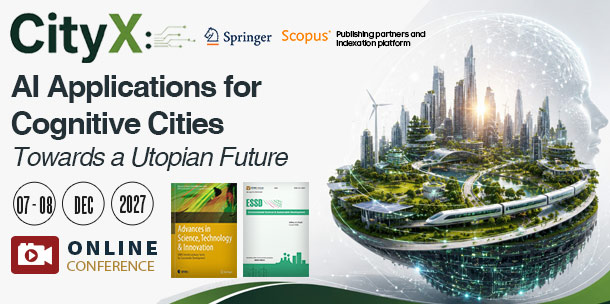
CityX: AI Applications for Cognitive Cities
- 07th Dec - 08th Dec 2027
- Online Conference
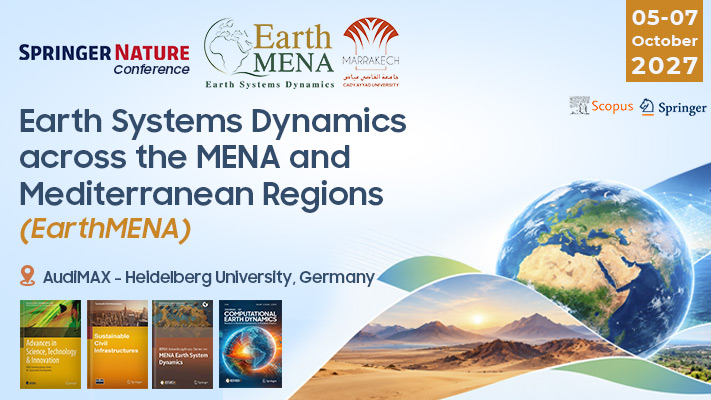
Earth Systems Dynamics across the MENA and Mediterranean Regions (EarthMENA)
- 05th Oct - 07th Oct 2027
- AudiMAX - Heidelberg, Germany
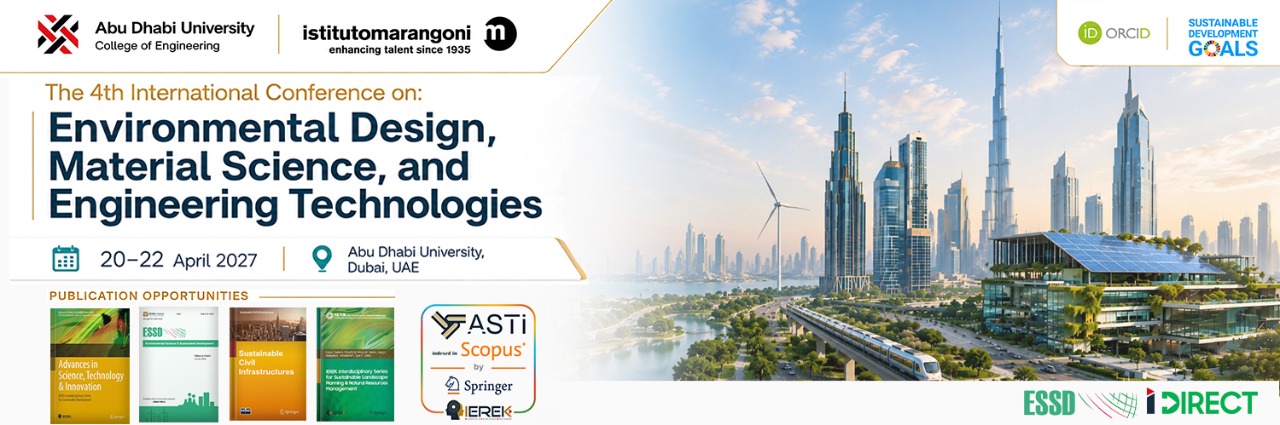
Environmental Design, Material Science, and Engineering Technologies (EDMSET) - 4th Edition
- 20th Apr - 22nd Apr 2027
- Abu Dhabi University, Dubai, UAE
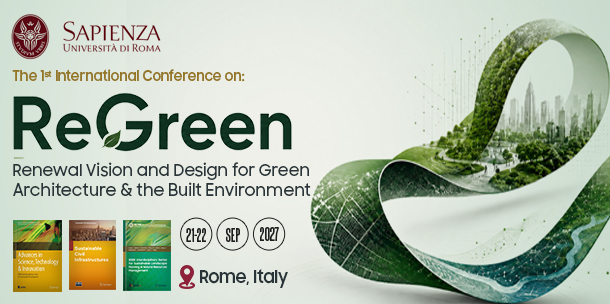
Regenerative Urbanism and Green Cities (ReGreen) - 1st Edition
- 21st Oct - 22nd Oct 2027
- Rome, Italy
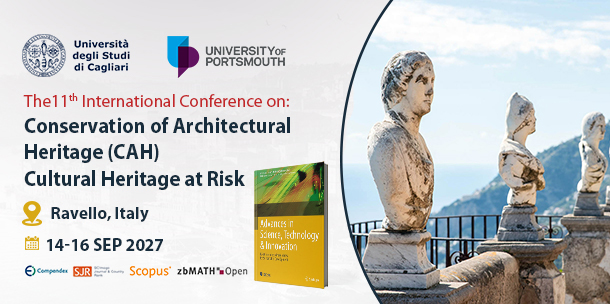
Conservation of Architectural Heritage (CAH) - 11th Edition
- 14th Sep - 16th Sep 2027
- Ravello, Italy
.jpeg)
AI & The Human Sphere (AI-Sphere)
- 30th May - 31st May 2027
- Online Conference
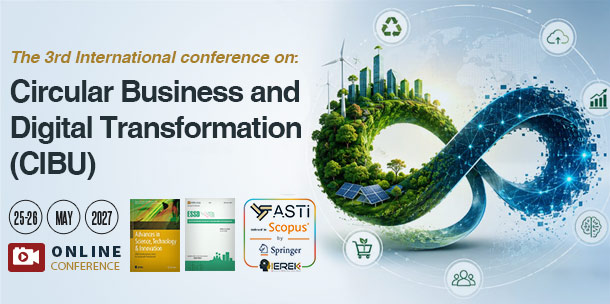
Circular Business and Digital Transformation: Resilience for a Regenerative Economy (CIBU) - 3rd Edition
- 25th May - 26th May 2027
- Online Conference
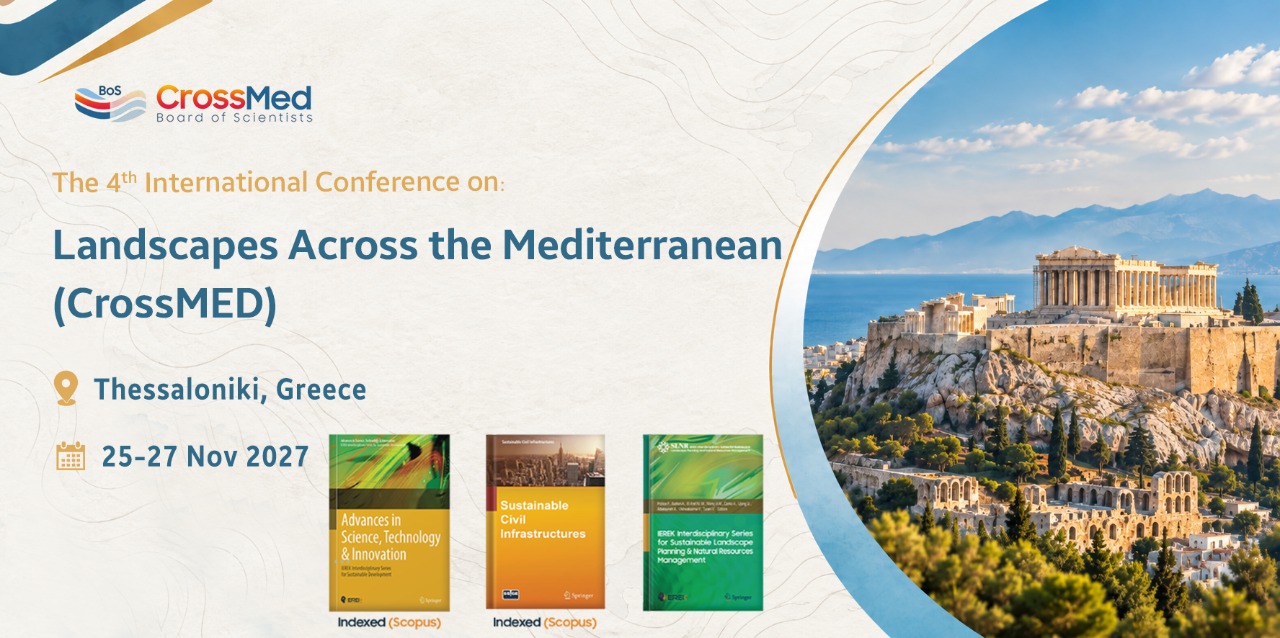
Landscapes Across the Mediterranean (CrossMED) - 4th Edition
- 25th Nov - 27th Nov 2027
- Thessaloniki, Greece
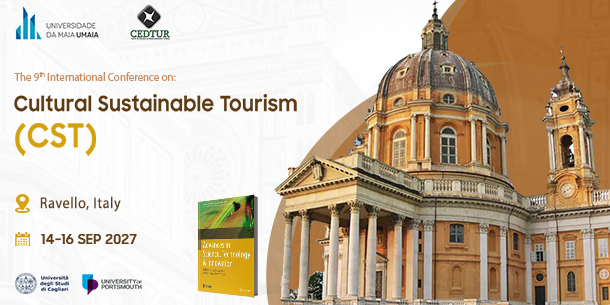
Cultural Sustainable Tourism (CST) - 9th Edition
- 14th Sep - 16th Sep 2027
- In collaboration with the University of Maia (UMAIA)
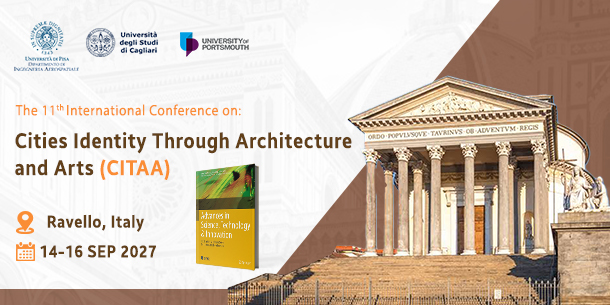
Cities Identity through Architecture and Arts (CITAA) - 11th Edition
- 14th Sep - 16th Sep 2027
- The European University Centre for Cultural Heritage, Ravello, Italy
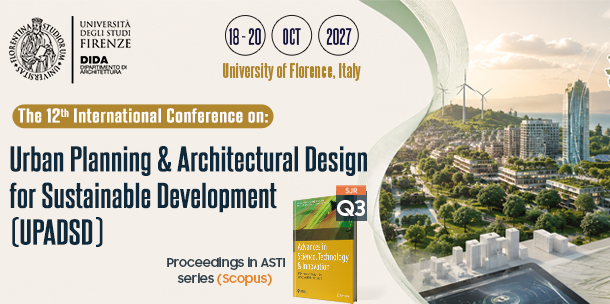
Urban Planning and Architectural Design for Sustainable Development (UPADSD) - 12th Edition
- 18th Oct - 20th Oct 2027
- University of Florence, Italy

Sustainability in Creative Industries (SCI) - 6th Edition
- 03rd Nov - 04th Nov 2027
- Online In Collaboration with Universitas Ciputra, Indonesia
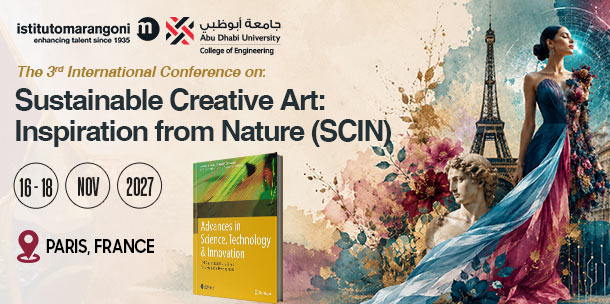
Sustainable Creative Art: Inspiration from Nature (SCIN) - 3rd Edition
- 16th Nov - 18th Nov 2027
- Paris, France
.jpg)
Urban Planning & Architectural Design for Sustainable Development (UPADSD) – 11th Edition
- 20th Oct - 22nd Oct 2026
- University of Florence, Italy
Ask Us Anything!
If you have any question regarding our services, please fill out the form below and we will get back to you as soon as possible.
Partners


